
Basic detection, $200–$400
Straightforward jobs: a limited pipe run, good access, the leak confirmed and marked.
The water bill knows something you don’t. Somewhere under a slab or behind a wall in Brookvale, a pipe is quietly feeding the ground, and finding it with instruments instead of a jackhammer is the difference between lifting three tiles and gutting a bathroom. We locate to centimetres, then repair through one deliberate hole.
A concealed leak cannot keep all three of its secrets. It makes a sound, pressurised water escaping sings in frequencies acoustic gear tracks along the pipe. It changes temperature, the wet path, or the warm plume of a leaking hot line, paints itself across thermal imaging. And it loses pressure, isolate the pipework section by section against a gauge, and the guilty run confesses while the innocent ones hold steady.
One signal narrows it; three signals convict. Where the readings intersect we mark the surface, and that mark is routinely metres from where instinct says to dig, especially under Brookvale’s renovated homes, where pipe runs wander in ways no drawing ever recorded. Every centimetre of accuracy is a tile that stays on the floor.
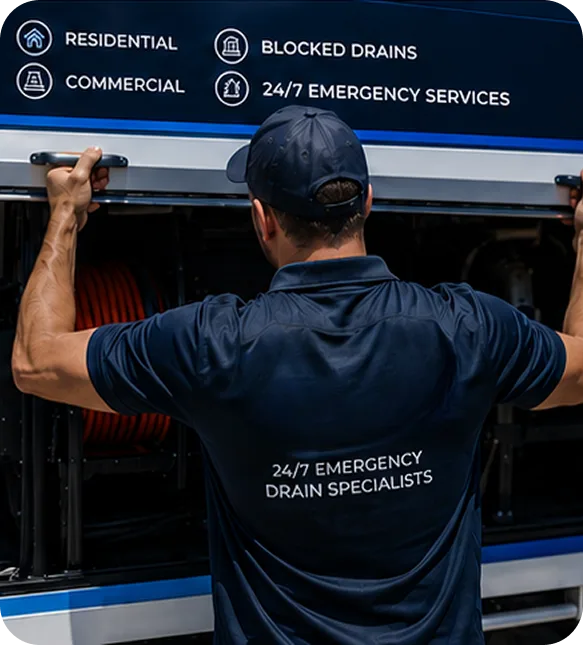

Brookvale is the industrial and retail hub of Sydney’s Northern Beaches (postcode 2100), spread across a valley floor between Dee Why, Manly Vale and the Allambie Heights ridge. Its mix of post-war homes, unit blocks and busy factory streets keeps drains under constant pressure.
The technical question and the financial question have different answers, and both need settling. Pipework serving only your lot is yours; risers, mains and common-property lines belong to the owners corporation.
A leak detection report that names the line, the lot and the direction of travel is what turns a dispute into a decision. That is what we write, because a description of where the water appeared settles nothing.
Mains pressure rises as elevation falls, and properties low on a slope routinely sit at the top of the acceptable range. Sustained high pressure is a genuine cause of leaks rather than merely a contributor.
Brookvale Creek collects runoff from the surrounding ridges, and in heavy rain the valley’s stormwater pits and pipes back up quickly, flooding yards and driveways.
If your property is low-lying relative to the surrounding streets and you have had more than one fitting fail, a pressure test costs very little and a limiting valve costs little more. It is the cheapest leak prevention available.
Much of residential Brookvale was built in the 1940s–60s on clay pipework that is now cracking and sagging, catching debris until the line stops flowing.
Not every escape of water is under pressure. A cracked drain leaks into the ground continuously without affecting the meter, without a pressure drop, and often without a single symptom inside the house.
The distinction decides the method. Pressure leaks are found with acoustics and the meter; drain faults are found with a camera and, where needed, a smoke or dye test.
The apartment showing the damage is almost never the apartment with the fault. Water tracks along the top of a slab, through penetrations and down whichever path is available, which can be several metres laterally before it enters your ceiling.
Thermal imaging and moisture mapping from below will usually establish the direction it is arriving from, which narrows the source before anyone needs access to a neighbour's bathroom.
A persistent sewer smell around a property with no obvious source is worth investigating properly. It usually means either a dry or failed trap, or a break in a line venting where it should not.
A smoke test finds both quickly, introduce smoke into the system and watch where it emerges. It is unglamorous, cheap, and conclusive in a way that sniffing around is not.
Damp or discoloured patches on walls, floors or ceilings; paint or plaster lifting at skirting level; a musty smell in one room; an area of the garden greener than the rest in dry weather; the sound of running water with everything off.
And the one people dismiss: a warm patch on a floor. That is a hot water line under the slab, and it is worth a call on its own.
Straightforward jobs: a limited pipe run, good access, the leak confirmed and marked.
The standard concealed-leak hunt with the full kit on site, acoustic, thermal, pressure testing.
Long pipe runs, poor access or multiple leaks add gauge-and-listen time past the first hour.
Deep slab lines and complex multi-storey tracing sit at the top of the Sydney range.
Detection tells you exactly what the repair involves, so the repair quote is built on evidence. One crew does both, no handover, no second call-out fee.
Weigh it against the alternative: exploratory demolition starts at more than detection costs, and it starts in the wrong place. Figures here are indicative of the 2026 Sydney market rather than a quote from us, you get your own number as a fixed price before any work starts.

The meter test done properly, plus your bills. If the evidence says there is no supply leak to find, you hear exactly that, free of a detection invoice.
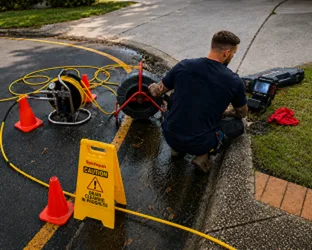
Isolating pipework section by section against a pressure gauge, hot versus cold, line by line, convicts one run and acquits the rest.

Acoustic tracking and thermal imaging walk the guilty run until the signals stack. The X on the floor is accurate to centimetres.
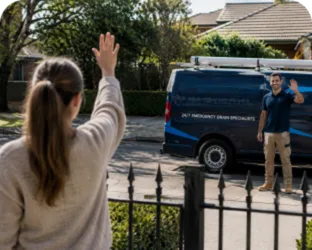
Access opens exactly at the mark; the failed section is repaired and pressure-tested. If the run's condition argues for a reroute instead, both numbers land first.
That is a leak, and it is not fixing itself. Book the detection before it surfaces through something expensive.
Instruments, a mark on the floor, one hole, one fix: and the meter finally standing still.

Leave your details and our local Brookvale team will call you back fast.